“Horoscopes and planetary alignments” of a fine biodynamic Romagna wine
Paride Benedetti, owner of Tenuta Santa Lucia in Mercato Saraceno, likes to tell his team and his customers: “Wines speak of us, of our land and of our work.”
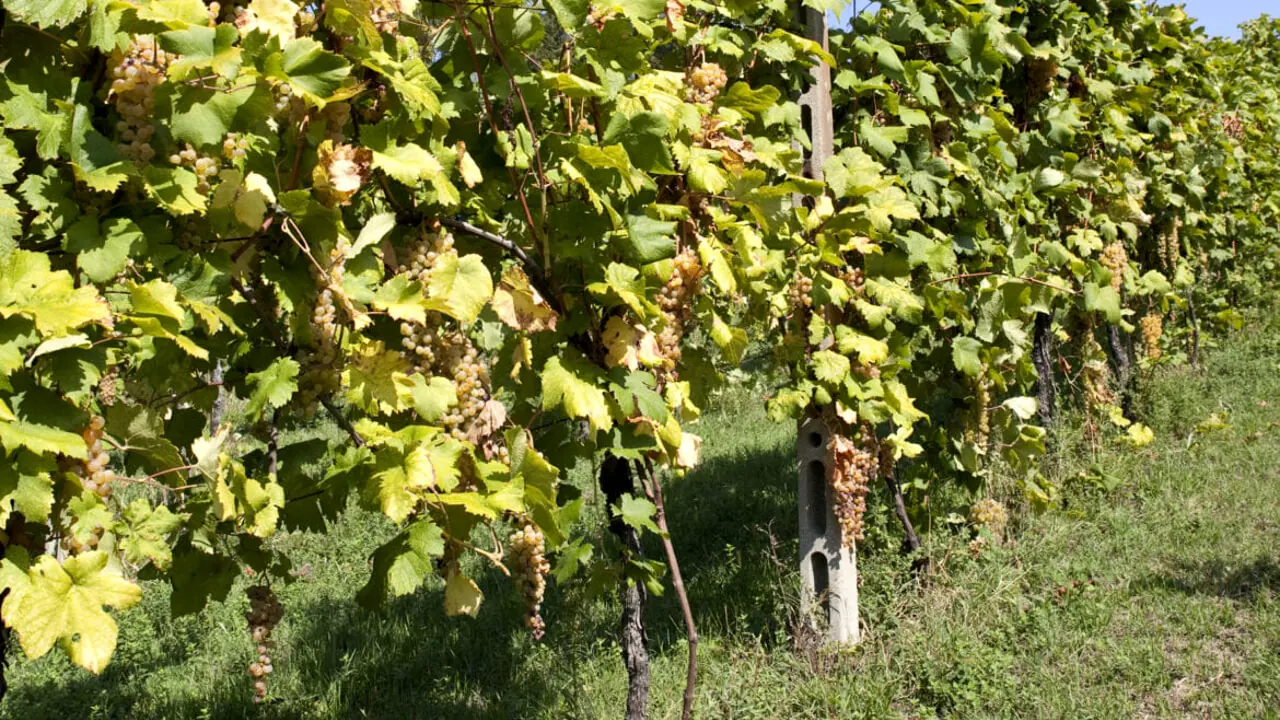
Paride Benedetti, owner of Tenuta Santa Lucia in Mercato Saraceno, likes to tell his team and his customers: “Wines speak of us, of our land and of our work. It is an emotion that will never run dry and will never stop speaking to the human heart.”
“Tenuta Santa Lucia is in Mercato Saraceno, in the heart of a rural, elusive Romagna. Here the land, the animals and the people are discreet but intense. A genuine warmth survives in the eyes of many people who, far from the turns of world events, still know how to give you a few minutes of sincere attention and a few measured, affectionate words.
Tenuta Santa Lucia was born at the end of the 1960s, but only in the late 1990s was the decision made to specialise in wine. Paride’s idea and philosophy is to make products strongly tied to the land they come from — hence the choice to grow and vinify native varieties such as Sangiovese, Albana, Famoso and Centesimino: plants grown in Romagna for hundreds of years, untouched by international grapes.
Tenuta Santa Lucia pursues quality through organic and biodynamic farming, which brings out the different expressions of the land, and through all the practices that respect the environment and the product, using natural preparations and organic and plant compounds. Only in this way is a truly typical wine born, with the unique character of its place and its vintage.”
As always, a little lesson. Do you know biodynamics? Let’s have a chat about it:
Biodynamic farming (from the Greek bios, life, and dynamis, force) is a new way of looking at agriculture, based on the principles of anthroposophy. In 1924 at Koberwitz the Austrian philosopher Rudolf Steiner, founder of anthroposophy, gave a series of eight lectures to farmers centred on the health of the soil and maintaining its fertility in order to improve the quality of the food that nourishes us. Lunar phases, preparations made from natural products such as chamomile, planetary alignments and guidance based on the signs of the zodiac are among the principles of the biodynamic farming promoted by the movement Steiner founded. But the first rule of biodynamics is not to poison the soil, and to respect the cycles and rhythms of nature.
In my view, many ride the fashion for the word and few truly adopt methods suited to the movement’s aims. A great many people stuff the story of their work with big biodynamic words that don’t match the reality.
Fortunately Romagna has honest, grounded producers like Paride of Tenuta Santa Lucia, who every day carefully nurtures his vineyards to bring products as “natural” as possible to our tables: Romagna genuineness in liquid form. In practice, Tenuta Santa Lucia uses only indigenous yeasts and completely bans synthetic chemical pesticides, herbicides, fungicides, insecticides and mineral fertilisers, using natural organic preparations instead. Biodynamics takes a lifetime to understand and absorb; Paride experiences it as continuous learning and a passionate daily search.
The job of Paride and his team is to bring to the cellar grapes that are as healthy as possible and in harmony with their surroundings. Work in the vineyard has to fit perfectly with the winemaker’s work in the cellar, so the aim is to use only native yeasts and follow spontaneous fermentations, so that the grapes aren’t “transformed” into wine but accompanied as they become it — always one step behind, so as not to break the harmony of the place, letting the wine express itself freely and give whoever sips it a taste that is the truth of that place: what the Romans called the “genius loci”.
Today we taste a superb Albana from Tenuta Santa Lucia: “Albarara Cru Artigianale”. 100% Albana from the single Roversano vineyard, at about 400 metres, facing south-east, on sandy calcareous soil with veins of tuff. A careful choice of harvest date (early September); meticulous selection of the grapes (by hand into 25 kg crates), both on the vine and in the cellar, with special attention to sun exposure and the integrity of the bunches brought to the sorting table. Temperature control, whole-bunch pressing, brief cold settling of the must, then spontaneous fermentation with native yeasts. Steel and oak casks in a balanced 50/50 split, eight months on its own lees with stirring of the fine lees, and at least 12 months in bottle before it reaches our tables.
In the glass, Albarara Cru Artigianale has beautiful golden highlights and excellent brilliance. The nose is fine, intense and elegant, with very clear fruit. Personally I find lots of loquat and quince, but by now you’re better than a sommelier at recognising aromas — have fun discovering new ones as always. And please, don’t overdo the showing off: once you’ve picked out one or two aromas, that’s more than enough for the pleasure of mindful drinking.
In the mouth it is broad, soft and round, with a long finish. An engaging wine. Its freshness balances its 14.5% alcohol so well you don’t notice it. It’s good. Albana’s hallmark is its tannins. Oh my, what did you say? Have you gone mad? Tannins in a white? Oh yes — in Albana you can feel them. In this one they are subtle and give the wine vigour and stature, elegantly.
A curiosity: two-thirds of this wine is “reserved” by a well-known Michelin-starred restaurant on our Romagna coast. Of the 3,000 bottles made, only 1,000 are left for us wine lovers. If you find it, put it in your cellar and on your table. You’ll love it: it is extremely food-friendly and suits a great many perfect pairings.
Today’s pairing? First, bring the wine to 14°C — don’t forget! Only then will its qualities shine. It works with aged cheeses as an aperitif, but I find it special with a good dish of baked fish or fish en papillote. The important thing, burdèl, is to give the dish some persistence with a few spices, to balance the stature of this Albana.
To keep it simple: don’t pair it with plain cod in butter — although, as the president of the Italian Sommelier Association says, here too “it depends”. Even simple cod can become a great dish to pair. Ready? Let’s drink…