In Romagna there’s a “Famoso” wine — and it isn’t Sangiovese or Trebbiano
Among Romagna’s native grapes, alongside Sangiovese, Trebbiano and Albana, there are lesser-known varieties that can amaze us and make us love our land even more.
Among Romagna’s native grapes — alongside Sangiovese, Trebbiano and Albana — there are lesser-known varieties that can amaze us and make us love our land even more. Though not widespread, they must not be considered “minor”: every time we find them in our glasses they astonish us, and I’m sure that, properly valued, they will soon win over all our tables. They’re the right stuff.
Today Sadifruttirossi introduces Mercato Saraceno’s most distinctive grape, Romagna’s aromatic variety par excellence and a great alternative to the usual Gewürztraminer — because, let’s be honest, Gewürztraminer at aperitivo time has become a bit tiresome. Burdèl, we’re talking about Famoso.
This grape nearly disappeared and was rediscovered at the end of the 1980s. At 370 metres at Montesasso (Mercato Saraceno), caressed by the Adriatic breeze, the area’s particular soils and wide temperature swings give the wine great freshness and minerality.
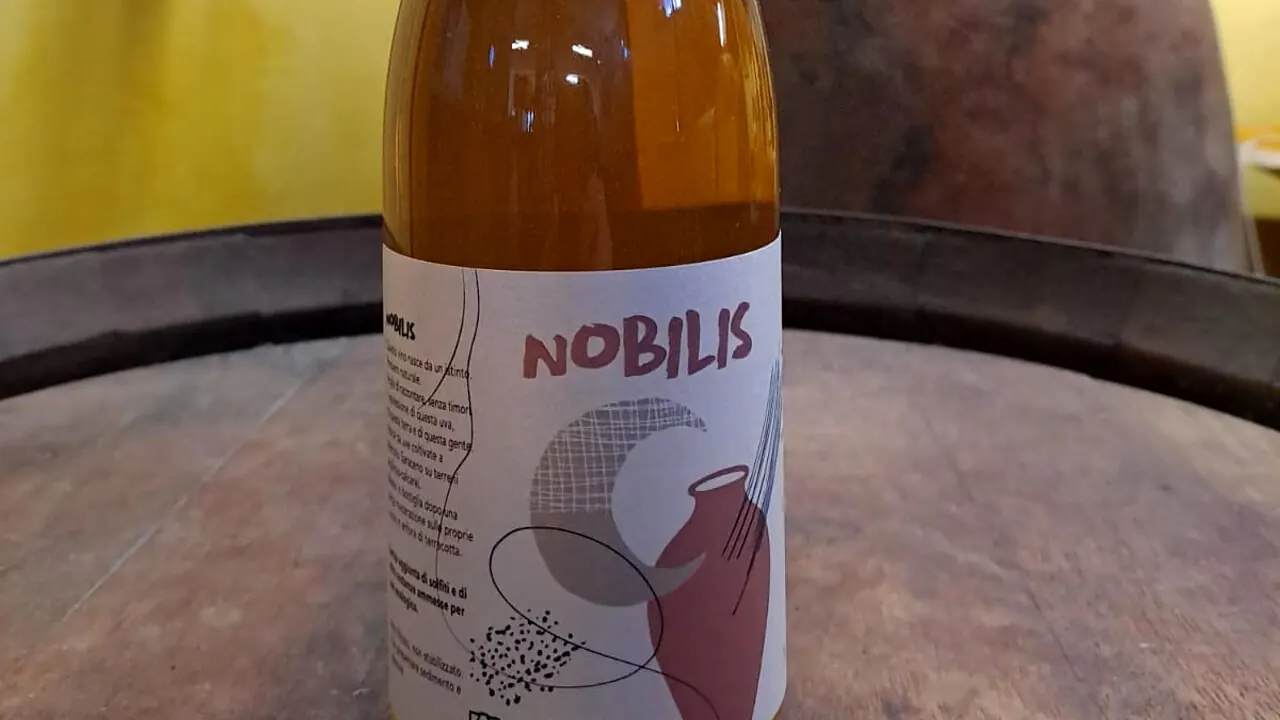
Big news: in March 2023 Famoso was finally promoted from “IGT Rubicone” to “DOC Romagna” with the specific mention “Mercato Saraceno”. What does that mean? Put simply, as our grandparents would say, it has climbed a step in the quality pyramid of Romagna wines. It comes in several versions, but the one I want you to discover today is the 2020 amphora Famoso from Podere Vertaglia, Cantina Bartolini of Mercato Saraceno: Nobilis.
First, a curiosity about the name: once upon a time “famoso” meant “noble”, which is why it was called “Nobilis”, the Latin word closest to that idea. The 2020 vintage was marked by strong day–night temperature swings — crucial for aromatic grapes — giving the fullest expression of aromas: rich, complex and further enhanced by the amphora.
Amphora wine is enjoying an unprecedented revival. Terracotta amphorae, used for winemaking since antiquity, have become a symbol of authenticity and of a return to origins. The practice dates back to the Romans and Greeks and in recent decades has regained prominence for its ability to bring out a wine’s character.
Cantina Bartolini of Mercato Saraceno is becoming a reference point in this field, combining traditional methods with a touch of innovation that captures the essence of the land, and showing that innovation can live in harmony with ancient traditions to create works of art for those who love to drink well.
Run by the Bartolini family for generations, the winery has made quality its mission, taking care of every step from grape selection to amphora ageing. The grapes are all picked by hand into small crates, and part of them go into a Georgian terracotta amphora (qvevri), where spontaneous fermentation begins and the Famoso macerates on its skins for several months. Every step towards Nobilis is as natural as possible, to enhance the variety.
Bartolini’s amphora-aged wine stands out for its aromatic complexity, elegant structure and depth of flavour. The choice of amphora is no accident: it allows micro-oxygenation and a slow, gradual maturation that give the wine an elegant structure, aromatic complexity and a depth that make it unique.
Every sip reveals a unique mix of ripe macerated fruit, spice and minerality — a real sensory experience. On the nose and palate you’ll also find the slight oxidative note typical of amphora ageing. Put your nose in: my first impression is sweet almond. Play with it and you’ll discover how many wonderful sensations a glass can hold.
Let’s sum up so we don’t get lost in chatter: Nobilis 2020, 100% aromatic Famoso grapes, no added sulphites, natural, aged in Georgian amphorae. 448 bottles were made in 2020, with sealing wax on the neck to minimise oxygen and a beautifully designed label on recycled paper. In my view, it’s a lovely gift for any occasion. Ready for the pairing? I’ll go out on a limb: one of the best pairings I’ve ever tasted.
Today’s pairing: try Nobilis with a proper traditional carbonara (guanciale and pecorino romano). The richness of the guanciale and the slight sweetness of the pasta balance beautifully with the wine’s acidity and savouriness.
Ready? Let’s drink…