Vigna delle Lepri: the wine President Pertini is said to have served Reagan
The very first single-varietal Sangiovese riserva made in Romagna.
A few kilometres from the Adriatic and from Cesena stands Bertinoro, a small medieval town in an enchanting setting of gentle hills and breathtaking views. A Romagnolo looking out from Bertinoro’s “terraces” would exclaim: “Wow, look at that!” At the foot of Bertinoro, against the Tuscan-Romagna Apennines, lies Fattoria Paradiso, an ancient Roman residence where Graziella and Jacopo work every day on their wine projects, between tradition and modernity.
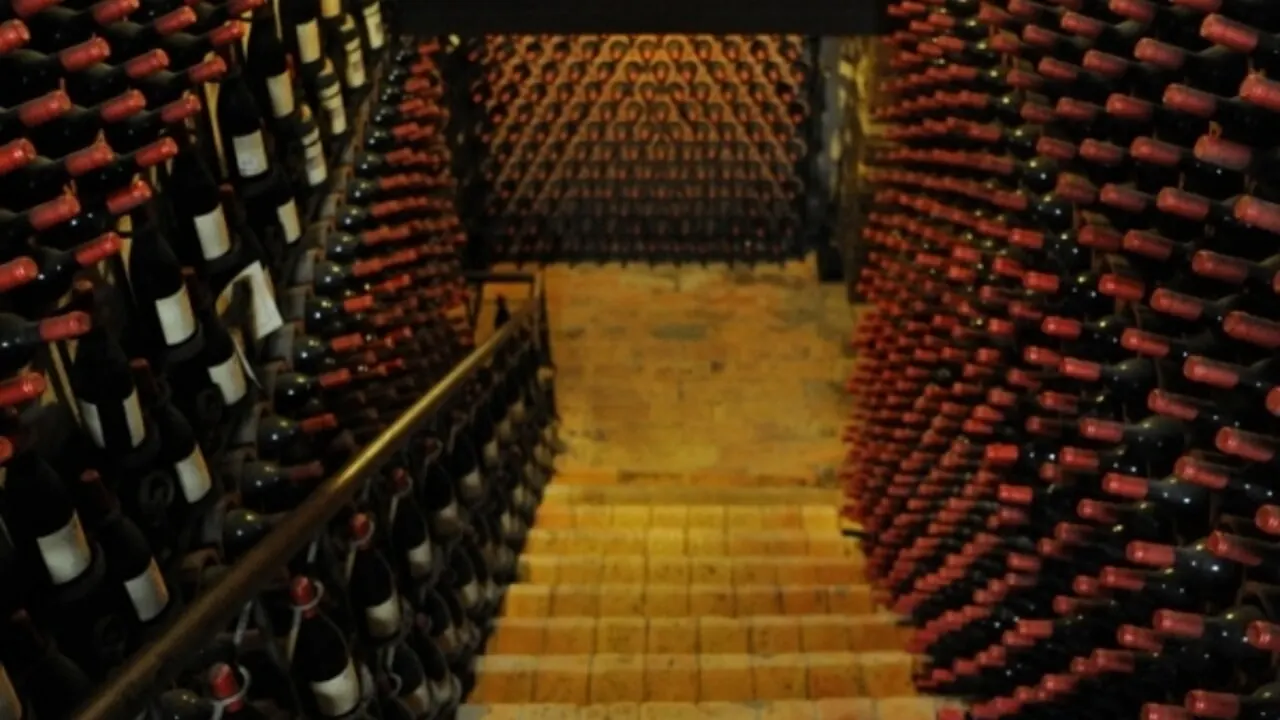
About 50 hectares of vineyards spread over calcareous-tuff soils, with ideal conditions for Sangiovese. And for the romantics: at the head of every row at Fattoria Paradiso a rose blooms each year. Sadifruttirossi takes you to discover Fattoria Paradiso’s “Vigna delle Lepri”, the very first single-varietal Sangiovese riserva made in Romagna. In the 1970s the press ran the headline “Sangiovese’s Easter”: some five thousand bottles of “Lepri” came to light, stored in an old cellar of the Counts Lovatelli’s villa and closed behind a hatch sealed by a notary.
It is also said that when Sandro Pertini became President of Italy he wanted Vigna delle Lepri for his official lunches, and Ronald Reagan was lucky enough to taste it during the American delegation’s visit to Rome in 1982. Vigna delle Lepri is made from 100% Sangiovese “Grosso” di Romagna, fermented spontaneously in steel.
Wait a second: Sangiovese Grosso? To be clear, it is the same grape used for Biondi Santi’s Brunello di Montalcino. Different territory, of course, but the raw material is the same. The wine continues to evolve in the cellar, ageing at least four years in large oak casks and at least one year in bottle before reaching our tables.
Tasting the 2016, I can tell you it’s still a baby, with many years ahead of it. Ten? Twenty? Thirty? Hard to say — but put a few bottles in the cellar and wait. Time will give you a lot. First challenge: what do we smell when we bring Vigna delle Lepri to our nose? Personally, the first pleasant aroma is plum jam; after a few more minutes I find cocoa, probably from the cask. Have fun discovering what aromas and sensations it awakens in you.
At last I drink it: on the palate its 13.5% alcohol is elegantly balanced by its structure. It’s good! Well-integrated tannins, excellent structure and elegance complete the picture of this Romagna gem. Serve it at around 16°C to bring out its best. If you’re tempted to decant it, don’t — unless you need to separate solids, i.e. sediment (which is the real purpose of decanting… did you know?). Instead, pour it into a nice glass and let it rest a few minutes before enjoying it. Repeat after me: a decanter isn’t for aerating wine! (More on that soon.)
Shall we eat? Vigna delle Lepri goes well with both simple and sophisticated dishes. So what’s the best pairing? It depends! (as AIS Romagna president Adolfo Treggiari teaches). Rabbit porchetta-style? Excellent. A roast? Even better. A Florentine steak? I’m in love. It also depends on the cooking method and on everything we add to the dish — herbs, spices, sides: I’d avoid mushrooms and artichokes.
If you open a young vintage, avoid bitter notes in the dish: watch, for example, how much you char a grilled Florentine steak — the charred bitterness would clash with our wine. Oven cooking is probably better, as it makes for a balanced pairing with the Vigna delle Lepri 2016.
Today’s pairing? A glass of Vigna delle Lepri with roast pork loin and roast potatoes, whose succulence and richness balance the wine’s tannins and persistence. Ready? Let’s drink.