Cà di Sopra’s Romagna Merlot: a Champions League wine
Merlot is one of the best-known grapes in the world. Its homeland is Pomerol, near Bordeaux, in France.
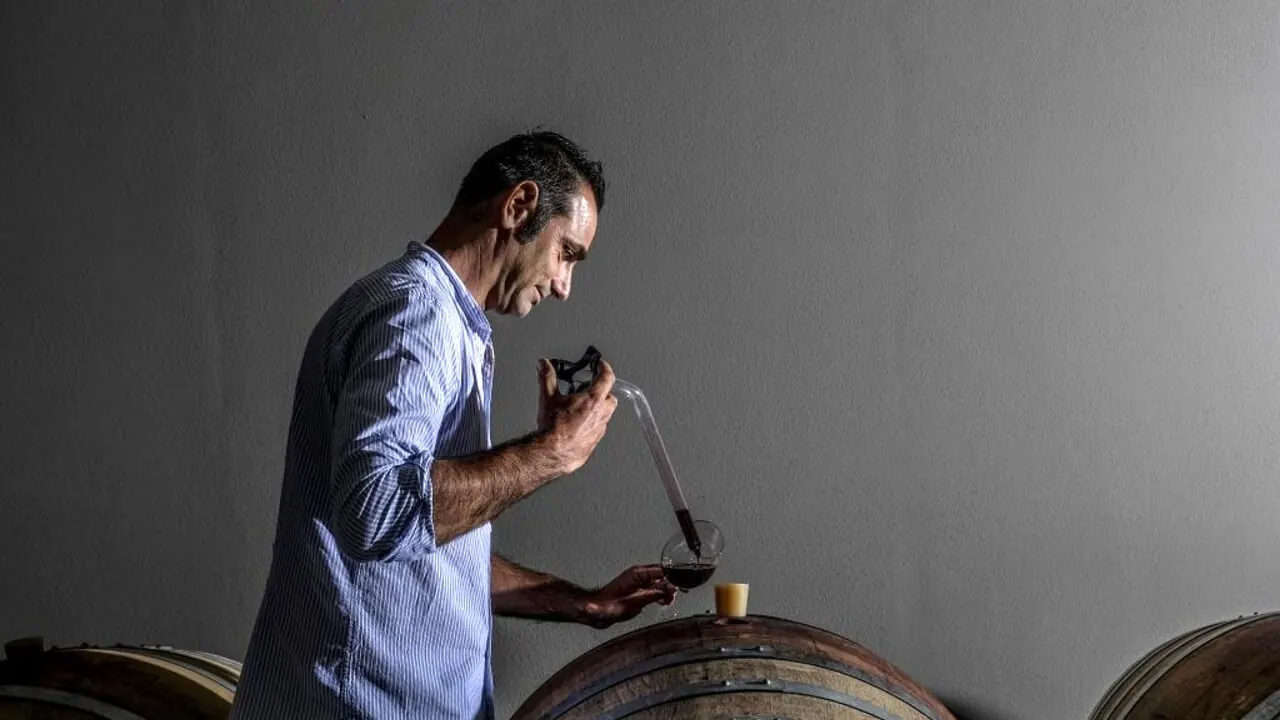
Merlot is one of the best-known grapes in the world. Its homeland is Pomerol, near Bordeaux, in France. Its sensory traits — above all the softness and fruit it can give a wine — are the main reasons for its fame and its spread across the globe.
Merlot is grown all over Italy, but only in Friuli Venezia Giulia, especially the Colli Orientali del Friuli, does it find truly favourable soil and climate. An elegant profile, liveliness and freshness are the hallmarks of Friulian Merlot. Merlot also grows along the Tuscan coast, particularly at Bolgheri. It is a very early-ripening variety and needs rich, “fat” soil such as clay, which holds water for a long time and prevents sudden ripening and excessive concentration.
Single-varietal Merlot is usually fermented in steel and matured in barrique. These are full-bodied wines with good longevity and a natural affinity for oak. Depending on origin and the producer’s style, you may find delicate, easy-drinking Merlot, but also serious, long-aged wines of great structure. In our beloved Romagna many producers grow Merlot and try every year to make it unique with their own, very different interpretations.
At the start of the year Sadifruttirossi organised a lovely — and delicious — tasting comparing some important Tuscan Merlots with a few Romagna wines, to understand the differences in the glass and above all Romagna’s potential next to Tuscany’s (famous all over the world by now, but sadly very — perhaps too — expensive). In particular, we compared the celebrated San Walfredo from Antinori’s Tenuta Guado al Tasso (which costs an arm and a leg) with our own RoncodiPacì from Cà di Sopra.
Both are 100% Merlot, but grown and made in (obviously) different places by (obviously) different producers. The result was thrilling, and certainly surprising: Romagna has excellent potential and one day, perhaps, it will be valued as it deserves. I believe in her… in her wines and in her magnificent producers… so keep reading to get to know the delicious Roncodipacì made by the Montanari brothers at Cà di Sopra.
It all began with a thought from Camillo and Giacomo Montanari: “the grapes that little vineyard gave us every year deserved to become a wine one day…” The Ca’ di Sopra farm is in Marzeno, on the first hills above Faenza, a short distance from Brisighella and Modigliana, in one of the most fascinating wine areas of Romagna.
Founded in 1967, the estate has always been devoted to wine thanks to its favourable microclimate. The soils are mainly clay and limestone, at 120 to 240 metres above sea level, and — as locals have always known — give grapes of great value. On the 52-hectare property the Montanari family has owned for more than 40 years, vines are the main crop, with 29 hectares of vineyards and a smaller area of apricot orchards.
After years of study, research and analysis, Giacomo and Camillo chose to focus on Ca’ di Sopra’s best vineyards to make a small quantity of high-quality wines in their small cellar.
On the Agello hill, on the right side of the Marzeno valley, the vines grow on very clayey, very calcareous soils between 100 and 180 metres above sea level. Agello is rich in vineyards that form a mosaic of expressions, differing in exposure, altitude and soil.
The Ca’ di Sopra farm has blue clays, while Ca’ del Rosso has red clays and limestone — the Pino and Punta Querce vineyards are examples. Sangiovese from Ca’ del Rosso shows the most refined side of Marzeno; its structure and power come out in the Montale vineyard, on bluer clays rich in marine fossils.
The lower-lying areas along the Marzeno stream, where river deposits add to the clay soils, are instead the perfect place to express the identity of the Merlot from the Ronco di Pacì vineyard.
The Ronco di Pacì vineyard lies at 80–100 metres on the north side of the Agello hill. Along the Marzeno stream the soil is made of calcareous clays and river debris. In 2001 the estate planted French Merlot vines here. The best Ronco di Pacì grapes are picked in the areas richest in clay. Fermentation is spontaneous and maceration lasts forty days, followed by twelve months in barrique/tonneau and another six months in steel. Finally it rests in bottle for at least thirty months.
Today Sadifruttirossi tastes Cà di Sopra’s Merlot RoncodiPacì 2016: 820 bottles made in total, at 14.5% alcohol.
In 2016 a rainy winter was followed by a particularly warm March that brought early budbreak. May was rainy, ensuring good water reserves and regular flowering at the end of the month, so spring could continue normally.
A hot summer, with good day–night temperature swings and scattered storms, favoured fairly early ripening. The Ronco di Pacì vineyard was harvested on 3 September.
In the glass our wine is a deep, decisive ruby red, almost impenetrable. Give the glass a gentle swirl and you can tell this is a full-bodied, structured wine with good density.
On the nose it is intense and complex. The dominant note is fruit — tamarind, raspberries, small wild berries and cherries. Oak ageing brings tertiary notes of leather, coffee and liquorice, while on the finish spices such as pepper and cloves take the lead.
On the palate the tannin is present and firm, but its texture is rounded and seductive. It blends well with the wine’s soft structure, adding balance and finesse. It is persistent and leaves a long aromatic memory. The 2016 we tasted is spectacular.
Today’s pairing? Ronco di Pacì suits many dishes: cured-meat starters, pasta with meat sauces, roasts and small game, as well as medium- or long-aged cheeses. I tried Cà di Sopra’s 2016 Merlot with Valsugana polenta, venison and mushrooms. A truly indulgent match — scout’s honour.
Our 2016 is also lovely as a wine for meditation, and I promise it doesn’t cost what Antinori’s San Walfredo does — yet it’s just as good. Buy it. Ready? Let’s drink…